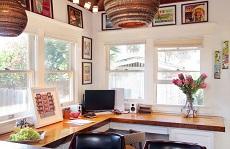
In today’s flexible work environment, you don’t need a dedicated study or spare bedroom to create a functional home office. With thoughtful planning and clever design choices, even a neglected nook can become a highly productive workspace. Whether you’re working remotely full-time, running a small business, or simply managing household admin, here’s how to turn a spare corner into a workspace that supports focus, efficiency and comfort.
Start with Purpose, Not Just Placement
Before you bring in a desk or chair, clarify how you’ll use the space. Will it be for video meetings? Creative work? Admin and paperwork? Your needs will shape everything from layout to lighting. Once you’ve defined its purpose, assess the corner itself:
- Is there access to natural light?
- Are there power points nearby?
- How much floor and wall space do you realistically have?
When space is limited, the key is selecting smart, space-conscious pieces. Investing in well-designed compact office furniture can dramatically improve both functionality and flow, allowing you to maximise productivity without overcrowding your home.
Choose the Right Desk for the Space
The desk is the anchor of your workspace, so proportion matters. In a spare corner, bulky furniture will quickly feel overwhelming. Consider:
- Corner desks that fit neatly into unused angles
- Wall-mounted or floating desks to free up floor space
- Slimline writing desks for lighter tasks
Measure carefully before purchasing, and allow room to move your chair comfortably. Ideally, you should have at least 60–70 cm of depth for a laptop or monitor setup.
Prioritise Ergonomics (Even in Small Spaces)
Just because your office is compact doesn’t mean you should compromise on comfort. Poor posture and awkward setups can lead to neck, shoulder and back strain. Focus on:
- An adjustable, supportive chair
- A desk height that allows your elbows to sit at roughly 90 degrees
- A monitor positioned at eye level
- A footrest if your feet don’t sit flat on the floor
Ergonomics is about preventing fatigue and injury. A well-set-up corner workspace can be just as healthy as a full-sized office when properly planned.
Make Vertical Space Your Best Friend
When floor space is limited, think upwards. Wall-mounted shelves, pegboards or vertical storage units can keep essential items within reach while maintaining a clean desktop. Floating shelves above the desk are perfect for:
- Books and binders
- Decorative items
- Storage boxes
- Plants
By using vertical space, you prevent clutter from spreading across your limited surface area.
Use Lighting to Define the Zone
Lighting plays a crucial role in both productivity and mood. If your spare corner is near a window, position your desk to take advantage of natural light without creating glare on your screen. If natural light is limited:
- Add a compact desk lamp with adjustable brightness
- Choose warm-neutral lighting to reduce eye strain
- Consider a floor lamp to visually “anchor” the workspace
Good lighting doesn’t just improve visibility — it psychologically signals that this corner has a distinct purpose.
Create Visual Separation
Even in open-plan homes, you can subtly define your workspace without major renovations. Try:
- A small area rug to visually frame the desk
- A tall plant to create a soft boundary
- A decorative screen or open shelving unit
- A contrasting paint colour or wallpaper behind the desk
These elements help mentally separate work from relaxation areas, which is especially important if your workspace sits in a living room or bedroom.
Keep It Clutter-Free
In small spaces, clutter accumulates quickly and affects focus. Adopt a minimalist mindset:
- Keep only daily essentials on your desk
- Store paperwork in drawers or labelled boxes
- Use cable organisers to manage cords
- Digitise documents where possible
A tidy workspace reduces cognitive overload and makes the area feel larger than it is.
Add Personality — Carefully
While functionality comes first, personal touches make the space inviting and motivating. Incorporate:
- A framed print or artwork
- A small indoor plant
- A vision board or pinboard
- A textured throw over your chair
Keep décor intentional and balanced. Too many decorative elements can overwhelm a compact area.
Think Flexibility and Adaptability
Your needs may evolve over time. Choose pieces that can adapt:
- Desks with built-in storage
- Mobile drawer units
- Foldaway desks if the space serves multiple purposes
- Stackable or nesting storage solutions
Flexibility ensures your workspace remains relevant as your work habits change.
Turning a spare corner into a productive workspace isn’t about square metreage… it’s about strategy
With careful planning, ergonomic awareness and thoughtfully selected furniture, even the smallest nook can support big goals. By focusing on proportion, smart storage and intentional design, you can create a workspace that feels purposeful rather than makeshift — a corner that works as hard as you do.
Related posts:
Are you Giving your Heart or just Hands to your Business?
List of Documents to Prepare for Business Sale
PTO Tracker: Why should you ditch the Spreadsheet and automate your employee’s Time Off and PTO Tracking?
What Factors Do You Need to Consider Before Hiring a Personal Injury Lawyer?
How to Boost Your Career with the Flexible Online MBA in Accounting